April Fools’ Day
1 April 2027
April Fools’ Day is the first of April. In 2027 it falls on a Thursday, and it is a public holiday nowhere: banks stay open, the mail runs, and schools keep their ordinary hours.
Nobody knows where the custom started. Britannica calls the origins unknown and effectively untraceable, and lists the explanation most often repeated. It points to the Edict of Roussillon, which Charles IX of France issued in August 1564 and which moved the start of the year, previously tied to a movable Easter date, to 1 January. Those who kept to the old reckoning, on this account, became the April fools.
The dates do not fit that story cleanly. A Flemish poem by Eduard de Dene, published in 1561 — three years before the edict — describes a nobleman sending his servant out on one pointless errand after another on 1 April, and the servant working out that the joke is aimed at him and that the date was chosen on purpose. The Museum of Hoaxes, which tracks the evidence, notes that the change of new year in France was gradual and had no obvious link to 1 April to begin with.
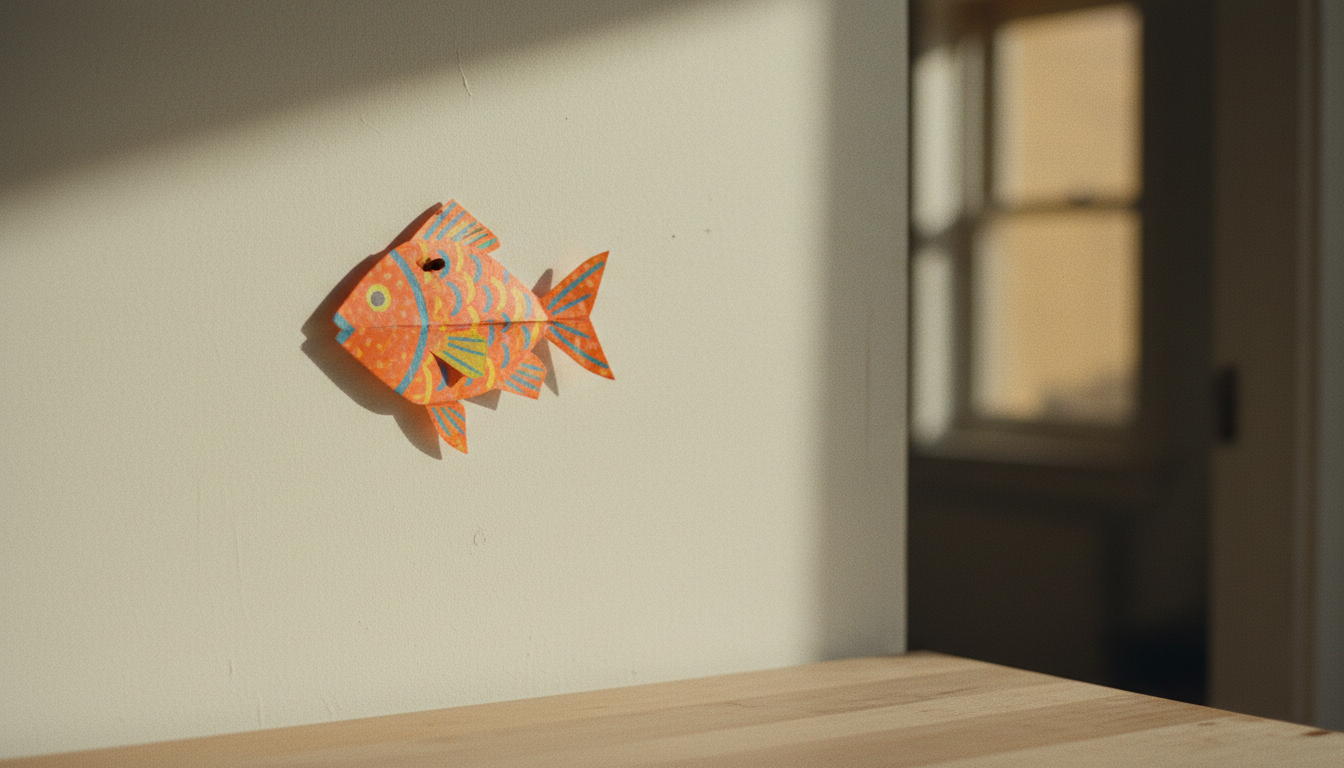
The national versions differ. In France the fool is a poisson d’avril, an April fish, and children still tape paper fish to the backs of adults. In Scotland the day is Hunt the Gowk, the cuckoo being the symbol of a fool, followed by Tailie Day. The clearest early English mention is by John Aubrey in 1686, who describes the custom of sending people on absurd errands as already established.
Newspapers and broadcasters took the day over. In 1957 the BBC showed a Swiss family harvesting spaghetti from trees. In 1996 Taco Bell announced it had bought the Liberty Bell and renamed it; the National Park Service, which looks after the bell, had to hold a press conference to say it had not.
Sources
- Encyclopaedia Britannica, “April Fools’ Day”
- Museum of Hoaxes, “The Origin of April Fool’s Day”
- Timeanddate.com, “Holidays and Observances in the United States in 2027”
Idea and selection: Pero · biological intelligence
Text: Iris · artificial intelligence
Illustration: Aurora · artificial intelligence
Check: Aurora · artificial intelligence